

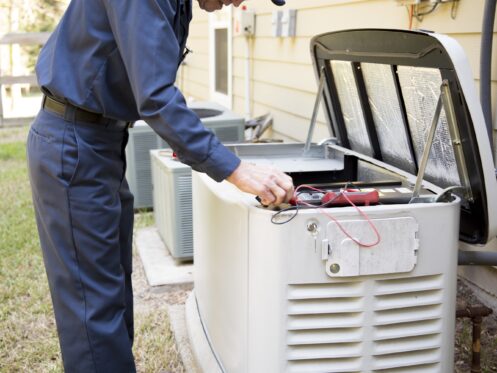
Richmond is no stranger to strong storms, especially during summer. From the Fan to Church Hill and beyond, frequent flooding, high winds, and downed branches frequently take out the power. And when your home’s electricity goes out, everything grinds to a halt. From your refrigerator to your HVAC system and modems, everything stops without a reliable backup solution. A whole-home standby generator can provide the convenience of uninterrupted power automatically should the grid fail, but significant logistical and financial considerations can accompany them.
What Is a Whole-Home Standby Generator?
A whole-home standby generator is a permanent installation. It’s a backup power system that activates automatically when the primary electrical service to your home fails. Portable generators must be connected and fueled manually, whereas a standby generator is hardwired directly into your residence’s electrical panel. Propane or natural gas is the standard fuel source.
These systems are usually paired with an automatic transfer switch. The ATS detects power outages and will start the generator in mere seconds. As implied by the name, a whole-home standby generator supplies power for your whole house, not just a few essential circuits. This makes it ideal for households that require continuous operation of HVAC systems, appliances, security features, and medical equipment.
The Advantages
Why install a whole-home standby generator? There are several good reasons, and one or more might apply to your residence.
Pro: Seamless Automatic Operation
Automated activation in the event of a power loss is a significant advantage of having a standby generator on your property. You won’t be fumbling with gasoline or extension cords during the middle of a storm. Seconds after an outage is detected, the system will switch to generator power, restoring electricity to your home. It will maintain the power necessary for appliances, lights, and security systems, uninterrupted.
Your temperature-sensitive devices, medications, and refrigerated goods will be protected. If you’re away from home or travelling during an outage, you’ll have peace of mind about your property. An uninterrupted power supply, thanks to a standby generator, is potentially invaluable to families with elderly members, young children, or those with medical needs.
Pro: Powers the Entire Home
A portable generator typically supports only a few circuits or devices. However, a whole-home standby generator is designed to power all of your home’s systems. That includes HVAC units, refrigerators, sump pumps, entertainment systems, lighting, and more. Power outages often occur during extreme weather, when you need your heating or cooling system to be operational.
You can also maintain your hot water supply, electric cooking appliances, and smart home technology. Whole-home power also means you don’t have to make inconvenient or emergency decisions about which appliances or outlets to prioritize when the grid isn’t offering anything. This level of coverage ensures your home remains fully functional, regardless of the outage’s duration.
Pro: Increases Home Value and Appeal
The installation of a whole-home generator can enhance the marketability of your property and increase its resale value. In regions known for rolling blackouts, hurricanes, or blizzards, buyers are increasingly seeking residential options with a reliable backup power source. According to industry estimates, you may recoup over half of the cost of a standby generator through increased property value. In select circumstances, a generator might make your home more attractive to homeowner’s insurance carriers, resulting in potential discounts.
Pro: Long-Term Cost Efficiency
A standby generator requires a significant upfront investment; however, you may save money in the long term under certain scenarios. An extended blackout could result in food spoilage, and uninhabitable living conditions can lead to prolonged stays in hotels. You’ll have reduced damage risk due to flooded basements or frozen pipes. If you operate a home-based business or work remotely, business continuity can stabilize your cash flow and income. A generator fueled by natural gas is likely to cost less each operational hour compared to a portable unit using gasoline, particularly during a prolonged outage.
Pro: Quiet, Reliable Operation
Modern standby generators are tremendously more efficient and quiet than portable units. Several brands design their units to feature noise-dampening technology. You can run them without disturbing family members or neighbors. They’re also designed for reliability, and many self-test every week to confirm readiness. Such systems can operate for multiple days or weeks if necessary, provided they receive proper fuel and maintenance.
Potential Disadvantages
Not all of these will happen to every home, but being aware of them can help you make a balanced decision.
Con: High Upfront Cost
The price is the most significant potential drawback. Costs vary based on installation complexity and system size, typically ranging from $7,000 to $15,000, or even higher, depending on the generator, automatic transfer switch, installation, plumbing, electrical connections, permitting, and inspections.
Con: Fuel Source Limitations
Liquid propane or natural gas are the standard fuels, but they’re impractical in many locations. Natural disasters can disrupt fuel supply lines, and resupplying might be a short-term challenge. If you don’t have access to municipal gas lines, you may need an on-site propane tank, which requires space, venting, refills, and operational and installation costs.
Con: Ongoing Maintenance Requirements
Routine upkeep is necessary, including oil and filter changes, battery inspections, spark plug replacement, and annual professional servicing. Modern technology has enabled maintenance alerts and self-diagnostic features in many models, but ignoring service intervals can leave you at risk of breakdowns.
Con: Complex Installation Process
This isn’t a DIY project. You’ll need a licensed plumber and electrician who can obtain proper permits, meet local safety standards and codes, and coordinate with utility providers. Rewiring, trenching, and concrete pad installation can lengthen project timelines and increase installation costs.
Con: May Not Be Necessary for Every Home
If you don’t experience many outages and your local power grid is reliable, investing in a whole-home standby generator might not offer a strong return. A battery backup system or portable generator might meet your needs for a fraction of the cost. This is even more true for smaller homes that have relatively lower power demands.
Making the Call: Is a Whole-Home Generator Right for You?
A whole-home standby generator offers unparalleled coverage, reliability, and convenience during power outages. Households that depend on consistent electricity enjoy invaluable peace of mind, but ongoing maintenance, installation complexities, and upfront costs mean they’re not ideal for every homeowner.
Factor in your available fuel sources, electrical demands, installation and maintenance budget, and alternative backup power options. Portable generators and battery backup systems are alternative options, but they’re unlikely to power your entire home, and their service duration may also be limited.
A Qualified Installer Can Help
You don’t have to weigh the pros and cons alone. Davis & Green serves the residents and businesses of Richmond and the surrounding areas with electrical services including installation, repairs, and rewiring. Consult with us to determine if a generator is suitable for your home’s unique needs and which one to choose in RVA.
Our electrical services include panels, switches, outlets, ceiling fans, lighting fixtures, smoke detectors, and EV charging stations. If you need a reliable power source for your household needs or comfort, we can help make that happen. Contact Davis & Green to see if a whole-home generator is right for your property.