

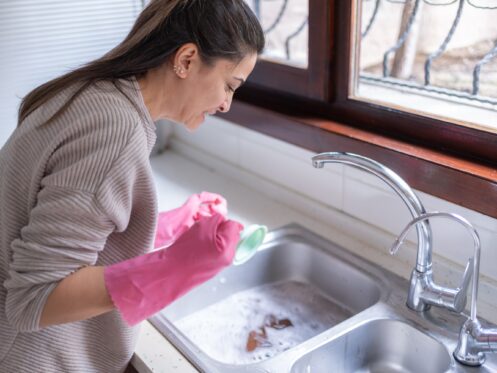
Grease goes down kitchen drains every single day. You might finish cooking and look at that little pool of grease in the pan. The easiest option seems obvious. You pour grease down the drain, chase it with hot water, and move on with your night. Since grease was in a liquid state, it seems like you have nothing to worry about.
Unfortunately, that moment of convenience can lead to serious problems. After the grease begins to solidify, it will stick to the sides of your pipes like glue. You are left with a sticky, pipe-clogging mess. With that, you have an expensive mistake that you will soon regret. Here is why pouring grease down the drain is a bad idea.
What Happens When Grease Goes Down the Drain?
Hot grease acts like a liquid. You might think that it will make its way through your plumbing system with ease. But as it cools, the grease hardens and coats everything it touches. Once it starts to solidify inside your pipes, that film catches bits of food, coffee grounds, and soap residue. What started as a thin coating becomes a sticky buildup. That means your water slows down, drains start to gurgle, and a faint odor begins to linger in the kitchen.
Unfortunately, the problem can lead to clogged drains. At that point, most people reach for a plunger or a bottle of drain cleaner. Many times, that does not work on grease. Chemical drain cleaners can corrode your pipes and harm your plumbing system. Plunging may only move the blockage a few inches before it re-solidifies.
If the grease makes it past your home’s plumbing, it does not vanish. It flows into the city’s sewer system. It can combine with other household fats, oils, and grease to form giant clumps known as “fatbergs.” These can block entire sewer lines. They also cost local governments substantial sums of money to remove. What begins as a quick pour from one kitchen sink can turn into a city-wide problem. When plumbers say never pour grease down the drain, trust them.
What Are the Signs That Grease Has Become a Problem?
There are some signs to help you spot a grease problem before it becomes an emergency. One of the first things most people notice is that the water drains more slowly than normal. For some people, it is an easy red flag to ignore. However, it is one of the earliest indicators that grease is starting to coat the inside of your pipes.
Along with that comes the smell. You may start to smell a faint, sour, or musty odor. However, no amount of dish soap or lemon peels seems to fix it. That smell comes from trapped food particles breaking down inside the grease layer. If the buildup is not dissolved, you might start hearing gurgling or bubbling sounds. This happens because air tries to escape around the partial blockages.
Many times, you might face more serious symptoms. The sink backs up, the dishwasher overflows, and water begins to reappear in other drains. At this stage, the problem has moved beyond a DIY fix. You will need to schedule a professional drain cleaning service. They can remove stubborn grease buildup and restore proper flow to your plumbing system.
What Happens When the Plumber Has to Fix It?
When grease buildup gets bad enough to call a plumber, the situation is not pretty, especially for your wallet. Plumbers have to bring in heavy-duty equipment to scrape, flush, or cut through the blockage.
In many cases, a professional plumber will start with a drain snake or auger to break up the clog. If that does not do the trick, they will move on to hydrojetting. This uses a high-pressure water stream to blast grease out of the pipes. You could spend anywhere from a few hundred dollars for a minor blockage to over a thousand.
Plus, if the clog caused water to back up or cracked an older pipe, you could be facing repairs or partial pipe replacement. It might feel like a hassle to dispose of grease the “right” way. However, that is nothing compared to the surprise of a repair bill that could have been avoided.
If your drains are already running slow or you suspect a buildup, reach out to a professional plumbing team. They can assess the issue, clear out the blockage, and make sure your plumbing system gets back to normal before a small problem becomes a big one.
The Right Way to Get Rid of Grease
Now that you know what pouring grease down the drain can do, what should you do instead? You want to start by letting the grease cool in the pan until it is warm. As it begins to thicken, pour it into a container you don’t mind throwing away, such as an old soup can or glass jar. When the container is full, seal it and toss it in the trash. You can also line a bowl with foil and pour in the grease. Once it solidifies, lift the foil out and throw it away.
Before washing your dishes, wipe them with a paper towel to remove any leftover residue. That small step keeps grease from sneaking into your sink or garbage disposal. You might want to use a sink strainer. This device catches bits of food before they have a chance to combine with grease and cause more buildup.
For kitchens that see heavy use, regular drain maintenance is a smart investment. Even with good habits, tiny traces of grease can slip through. Over time, they can collect in parts of your plumbing that are difficult to reach. A professional cleaning keeps everything flowing smoothly and prevents repairs later.
What to Do If You’ve Already Poured Grease Down the Drain
If you’ve already poured grease down the drain, there is still hope. You do want to take quick action. Make sure to run hot water with dish soap. That can help melt and move some of the grease before it hardens. However, that is not a complete solution, as it will not reach deep into your pipes.
You want to avoid using boiling water, especially if your home has PVC plumbing. Extreme heat can soften the plastic and cause misalignments. Additionally, steer clear of chemical drain cleaners that promise instant results. They can corrode metal pipes, damage seals, and make future problems harder to fix.
If your kitchen sink is starting to drain slowly or you’ve noticed that telltale gurgle, you need professional help. Since 1984, Davis & Green has been helping homeowners across Richmond, VA, keep their drains clear.
Do Not Delay in Getting Help
Whether you’re dealing with a stubborn clog or want to prevent future buildup, reach out to us. Our team can handle repairs, maintenance, and installations for your home’s plumbing system. We will take the time to do every job right.
Give us a call today to schedule an appointment with Davis & Green.