

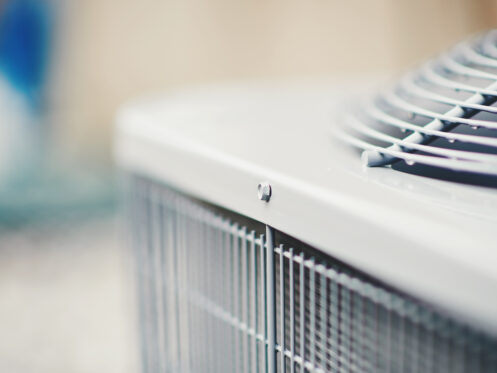
Ensuring your home is always fully comfortable is important, but it can also come at a fairly high cost. After all, heating and air conditioning are among the biggest contributors to a home’s energy bills. That’s why it’s essential that you ensure your HVAC system works efficiently and monitor it for any signs that indicate it isn’t working as well as it should. In this article, we’ll explore the most effective ways to boost the energy efficiency of your HVAC system so that you can keep your energy bills from being higher than they need to be.
1. Use the Right Air Filter and Replace It Regularly
Not replacing the air filter in your HVAC system often enough greatly contributes to decreased energy efficiency. When the filter is clean, air can easily flow straight through it on the way to the furnace/air handler. As the filter gets dirty and starts to clog, the amount of air that the blower can draw through it continually decreases. That means you end up with the airflow coming into your HVAC system being restricted, resulting in the system putting out far less hot or cold air than it should. The end result is much longer heating or cooling cycles. This leads to your HVAC system consuming much more energy.
The basic recommendation is that you should change the filter no less than once every 90 days. Nonetheless, we recommend removing and checking the filter monthly since there are times when it can end up clogging faster. This is especially common during periods of extreme heat or cold when your HVAC system runs for many more hours every day. People with indoor pets are typically also better to replace their filters more often since pet hair can quickly start clogging up an air filter.
You also need to make sure you’re using the correct filter for your HVAC system. A filter’s MERV (Minimum Efficiency Reporting Value) rating tells you how efficiently it works at filtering out airborne particles and debris. Most experts recommend using between a MERV 8 and 13 filter for a residential HVAC system. The only thing is that not all residential HVAC systems are large and powerful enough to work properly with a higher-efficiency filter. This is because the more efficient the filter is, the more it restricts airflow. As such, it’s a good idea to check with a technician the next time you have your HVAC system serviced to see what filter they recommend you use.
You can also easily tell if you’re using too efficient of a filter since it will result in much less air flowing out of your vents. In this case, we recommend going down one level, such as from MERV 13 to MERV 10 or MERV 10 to MERV 8. We also generally don’t recommend going any lower than MERV 8 or else the filter won’t work efficiently enough to prevent a large amount of dust and debris from getting sucked into your furnace/air handler.
2. Upgrade Your HVAC System With a Smart Thermostat
Studies have shown that turning your heating down or AC up by around 8 degrees for eight hours each day can reduce your HVAC system’s energy usage by around 10%. That means that any programmable thermostat can help you save energy as long as you program it correctly. That said, you’ll always see the biggest impact on energy usage and efficiency with a Wi-Fi smart thermostat. This is especially true if you choose an ENERGY STAR-certified model since all of these models are required to have certain functions or capabilities that improve HVAC efficiency. For instance, the thermostat’s app has a function that allows you to monitor energy usage and provides information on how your thermostat settings are impacting your HVAC system’s energy efficiency. The app also can give you tips on minor adjustments you can make to the settings to improve efficiency and decrease energy use.
So-called “learning thermostats” are especially useful for improving efficiency. This type of thermostat uses sensors around the house and an algorithm to learn from your normal behavior patterns. In this way, the thermostat can program the temperature settings by itself so that your HVAC system uses as little energy as possible while still ensuring your home is always comfortable. For instance, the thermostat will start automatically adjusting the temperature at the time you normally go to bed so your HVAC system doesn’t run more than it needs to at night. It will then do the same thing at the time you normally leave for work before switching back to the normal temperature setting later in the day so your home is comfortable when you get back.
3. Insulate Your Ductwork
This one is only really applicable if you have any ducts inside your attic or crawl space. If you do, it’s essential that these ducts are fully insulated so that they don’t get too hot in the summer or cold in the winter. If the ducts aren’t insulated, your HVAC system will waste energy as a result of the conditioned air gaining or losing heat as it travels through the ducts. This heat gain or loss can greatly decrease the effectiveness of your HVAC system so it has to run more. It can also result in some rooms never getting quite as warm or cold as you want them to be.
4. Make Sure Your Ducts Are Properly Sealed
Having your ductwork inspected every year or so is essential for ensuring every duct is properly sealed and there are no air leaks. Leaky ducts are a major issue in terms of energy efficiency since they result in an HVAC system wasting quite a bit of the energy it uses. In some cases, air leakage can reduce the efficiency of an HVAC system by 20% or more. Generally speaking, you should make sure to have your entire duct system fully resealed at least every 10 years. If your duct system is older and starting to deteriorate, you may need to have it resealed more often. It’s also a good idea to replace all of the ducts in your home every 25 years. Many experts instead just recommend duct replacement whenever replacing your furnace, AC or heat pump to ensure the new unit works as well as it should.
5. Schedule a Twice Yearly Tune-Up
The one thing that will generally have the biggest impact on efficiency is having your HVAC system serviced by a certified technician every year. If you have central heating and air, schedule a heating tune-up each fall and a cooling tune-up each spring. It’s a simple fact that your HVAC system won’t ever perform as well as it should if you don’t make sure it’s properly maintained.
Annual tune-ups can also save you money by lessening the amount of repairs your HVAC system needs over the course of its life. Another major benefit is that it helps to protect the lifespan of your HVAC system so that your heating or cooling doesn’t end up giving out sooner than it should.
For the past 40 years, Davis & Green has been the company home and business owners in the Richmond area have turned to for all of their indoor comfort needs, including indoor air quality. We specialize in all types of residential and commercial heating and cooling services and are ready to help ensure your HVAC system works as efficiently as possible. To schedule an HVAC tune-up or any other heating, cooling, plumbing or electrical service, contact us today.