

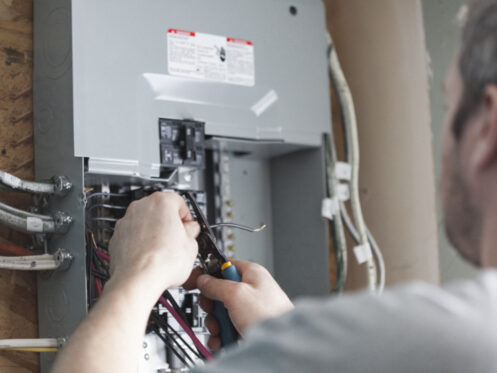
Electrical repairs can be costly and are typically an out-of-pocket expense. The good news is that most common issues are avoidable, and here are 10 tips to help you do just that.
1. Maintain Optimal Ventilation and Humidity
The relevance of ventilation and humidity is not exclusive to air quality and your HVAC system. They also play a role in the performance and maintenance of your electrical system. Ventilation is most important in scenarios where there’s a buildup of heat due to electronic devices. Even something as simple as adding a fan to a room can help dissipate the concentrated heat and protect the devices.
Too little humidity is problematic because it leads to electrostatic buildup, which can damage electrical devices like laptops and computers over time. Alternatively, too much humidity is problematic because it leads to moisture buildup, which can cause corrosion and short-circuiting. Fortunately, the ideal relative humidity (RH) for electrics and electronics is the same as for humans: between 30% and 50%.
2. Schedule a Comprehensive Inspection
You should schedule a professional, comprehensive inspection of your home’s electrical system every 10 years at a minimum. Some experts recommend scheduling every three to five years, particularly if your home is 25 years old or older. Many homeowners take a fix-it-when-it-breaks approach to their electric systems, but that often costs them more money in the end. Wear and tear occurs in an electrical system, and proactive repairs will be more convenient and affordable than dealing with issues as they happen.
3. Bring Your Home Up to Code
Having your electrical system inspected annually gives you peace of mind. The other consideration is the National Electrical Code (NEC). The NEC is the U.S. standard for electrical wiring and equipment. It is a component of the National Fire Codes series, which the National Fire Protection Association (NFPA) maintains. While homeowners are not legally required to upgrade their homes based on updates to the NEC, it is strongly recommended. An up-to-date home is less prone to electrical fires.
It’s also important to consider that electric devices and electronic components are constantly evolving. There was a point that a 110-volt electrical panel was the standard. If you live in an older home, you may even have one. The NEC standard is now a 240-volt electrical panel.
Many homeowners with older homes face issues due to their older equipment. These problems are common when installing things like EV charging stations and tankless water heaters. If you have an older panel, you should consider panel replacement or at least panel rejuvenation. Professionals also recommend upgrading outlets near water sources to the much safer GCFI outlets.
4. Invest in Whole-Home Surge Protection
As of 2022, the NEC now requires whole-house surge protection. That means that all houses built after 2021 will have it, and experts recommend it for older homes, too. Surge protection safeguards against regular spikes and surges that cause wear in your system. It also helps to protect against major damage.
There are three layers to surge protection: Type 1, Type 2, and Type 3. T1 refers to protection situated between the grid and your home’s electrical system. It protects against direct lightning strikes and power anomalies coming into the home from the street. T2 refers to protection between the electrical panel and the rest of the home’s electrical system. It protects against direct lightning strikes as well as secondary surges and surges that originate locally.
The NEC requires T2. Many electricians recommend layering T1 and T2 for maximum protection. T3 refers to point-of-use protection, such as a surge protector strip. You may also want to consider outlets with integrated T3 surge protection along with features like USB and Ethernet ports.
5. Don’t Ignore Tripped Circuit Breakers
Circuit breakers will trip once in a while, and fuses will blow. Their purpose is to do this in order to protect the rest of your system. However, frequent tripping is not normal. The breaker may be bad, or it may point to a systemic issue. Call an electrician to inspect your panel.
6. Don’t Overload Outlets
The most common way homeowners overload sockets is with power strips. Overloading can result in fire, damage to your devices, and harm to the outlet and wiring. If you need more power access in an area, schedule your electrician to add one or more additional outlets on separate circuits.
7. Dust Outlets, Switches and Appliances
Dust can be a much bigger problem for your electrical system than many homeowners realize. It interferes with electrical signals and can also be directly conductive and cause damage. Additionally, it can insulate and cause overheating, and it can also attract and hold moisture.
Control dust in your home by deep dusting at least once a week. Dust all appliances and electronic devices. Once a month, dust all outlets and switches. You should also open your electrical panel door and give all aspects, including circuit breakers and fuses, a good dusting as well.
8. Check Outlets With a Multimeter
A multimeter is a handy tool every homeowner should have. When cleaning your outlets each month, use it to test them. If the outlet is functioning well, you should see a reading between 110 and 120 volts. If you get a reading less than 110 volts, you know you have an electrical issue.
9. Upgrade to Save Energy and Protect Your Electrical System
There are many reasons to upgrade your home with more energy-efficient appliances and HVAC systems. They include lowering your household’s carbon footprint and reducing your month-to-month energy expenses. In fact, the EPA estimates that you can cut your electricity costs by about 10% a year. Another oft-overlooked benefit is reducing the normal wear and tear on your home’s electrical system.
There are a number of key areas to consider. When replacing major appliances and HVAC equipment, choose Energy Star products. They consume significantly less electricity than their standard counterparts. Make the switch to LED bulbs, and if you have dimmers, ensure that you choose LEDs that support them. Experts also recommend upgrading to smart outlets. Smart outlets can automatically turn off lights and appliances after a set period or on a schedule. They also prevent phantom draw, which is the use of electricity by devices on standby. The Department of Energy estimates that phantom draw accounts for 5-10% of the average home’s total electricity consumption.
10. Discard Frayed or Otherwise Damaged Cables
Frayed electrical cords are a major hazard. They can start fires, trip circuit breakers, and damage outlets and appliances. Discard damaged cables and power strips and replace them. If a particular cable is not easily replaced, bring it to a professional for repair. Never tape it up or use any other makeshift methods.
Your Local Electrical Contractor in Richmond
At Davis & Green, we have been serving the residents of Richmond, VA and the surrounding areas since 1984. We install, maintain, and repair heating and cooling systems. Additionally, we are expert electricians who perform inspections, repairs, upgrade electrical panels, and install EV charging stations. We can also install GFI outlets and smoke and CO detectors. Contact us today to schedule an appointment with one of our experienced team members.