

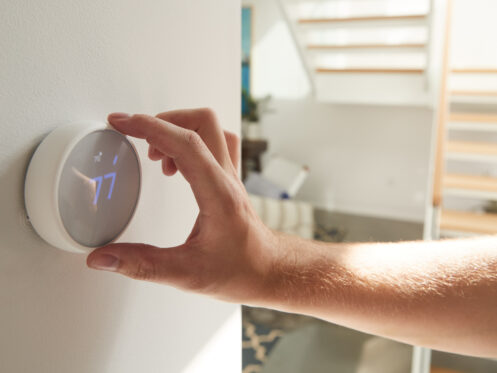
Imagine the convenience of your thermostat adjusting the temperature based on location, just like your phone for traffic updates or weather alerts. This is the power of geofencing. At Davis & Green in Richmond, VA, we empower homeowners with smart features that make heating and cooling more convenient and efficient. Whether you’re arriving home or miles away, geofencing ensures your HVAC system is always one step ahead, putting you firmly in control.
Why It’s Smarter Than a Set Schedule
Programmable thermostats rely on time blocks. You set one temperature for the morning, another for the afternoon, and something else for nighttime. But your daily routine is not always predictable. You might leave earlier than usual or stay out late. Meanwhile, your thermostat sticks to its plan, even if no one’s there to benefit.
Geofencing offers a better option by adjusting the temperature based on your location. If you’re heading home early, it automatically starts warming or cooling your house. If you’re delayed or make an extra stop, the system holds off, so you’re not using energy when you don’t need to. This kind of flexibility means your home stays comfortable when you’re there, but your system doesn’t waste energy when you’re not.
What It’s Like to Use It
The change is subtle, but you notice it. You don’t walk into a house that feels like it’s been sitting empty all day. The temperature feels just right, not too warm or too cold, and the system isn’t working overtime to catch up. That’s because it started adjusting before you got home, not after. By the time you settle in, everything already feels comfortable.
Leaving the house is just as smooth. You don’t have to pause at the thermostat on your way out. You simply leave, and the system adjusts in the background. That may not seem like a big deal, but when you’re juggling bags, coffee, or kids, skipping even one step makes the morning go more smoothly.
Over time, you’ll find yourself making fewer manual changes. The system responds based on your location, not on a fixed schedule. It might not adjust if you’re just out for a short errand. But if you’re clearly away from home for a while, it dials things back to save energy.
Saving Energy Without Sacrificing Comfort
Most of the time, saving energy means turning something off or down. That can make people hesitate, especially if they think it will leave the house uncomfortable. Geofencing makes this trade-off less noticeable. The temperature adjusts while no one is home, so you’re not there to feel the change. When you return, the house feels how you want it to.
You don’t need to remember to make adjustments before you leave, which is when most people forget. The thermostat takes care of that part. It cuts back while the house is empty and then ramps back up in time for you to enjoy it. That kind of pattern adds up, especially if your home empties out for work and errands during the week.
This doesn’t mean the system shuts off completely. It just reduces demand when it makes sense to do so. The difference is small day to day, but it compounds across the month. It gives you better control without always needing your input. And you don’t have to choose between saving money and keeping your space pleasant.
Combining Geofencing with Other Features
Geofencing works best when paired with your thermostat’s other smart features. For instance, you might still prefer a nighttime temperature range while you sleep. That schedule can run in the background while geofencing manages comfort during the day based on whether you’re home or away. It’s not about replacing one approach with another. It’s about adding flexibility where it matters. The location-based settings fill in the gaps a traditional schedule might miss, especially when your routine isn’t predictable.
Some systems also work with additional sensors, like room occupancy or indoor humidity monitors, though these features vary by model. When available, they can further fine-tune how your HVAC system responds.
Voice control or a smart speaker is another common pairing. It’s useful for quick adjustments while you’re home. You don’t have to pick one method over another. The best setups use both smart automation that reacts on its own and manual controls for when you want to take the lead. It keeps the system simple to use but more responsive to your actual lifestyle.
Privacy Concerns and Location Tracking
It’s completely reasonable to have questions about privacy when you hear that a thermostat uses your location. But geofencing does not track your every move. It does not store a detailed history or monitor where you go throughout the day. Instead, it uses your phone’s location to check just one thing: whether you’re inside or outside a virtual boundary around your home.
The boundary is something you define during setup. Most apps give you full control over its size, which devices are linked, and whether the feature is even turned on. For added privacy, many people keep the boundary small, so the system only activates when they are very close to home. You can also limit location sharing to specific users, which is helpful in households where not everyone wants to participate.
Your location data typically stays on your device or within the thermostat’s app. It is not shared with outside companies unless you give explicit permission. The system is not monitoring your behavior. It simply uses a signal to decide when to start heating or cooling.
Set Up and Fine-Tuning
Getting started with geofencing is usually straightforward. You’ll link your thermostat app to your smartphone, enable location access, and define a virtual boundary around your home, often by selecting a radius from your address. Once that’s in place, the thermostat can begin adjusting temperatures based on whether you’re inside or outside that area.
Fine-tuning may take a little time. If your thermostat adjusts to a more economical temperature when you’re just walking your dog, you may need to reduce the radius. If the house doesn’t feel ready when you arrive, increasing the boundary slightly can give the system more time to prepare before you walk in.
It’s also important to set up location access for everyone who lives in your home. Most geofencing thermostats rely on linked smartphones to decide when the house is occupied. If only one person has location access, the system might start adjusting temperatures too early or shut things down while others are still inside. Giving access to multiple household members helps the system make smarter decisions about when to turn the heating or cooling on or off.
Contact Your Local Heating and Cooling Experts
At Davis & Green, we have been serving the residents of Richmond, VA, and the surrounding areas since 1984. We can help you choose a smart thermostat that will meet your needs and budget. We also offer HVAC installation, repairs, and maintenance, as well as indoor air quality services. Contact us today to schedule an appointment with one of our experienced technicians.